Best Beekeeping Starter Kits for Beginners: What Each Kit Includes
The best beekeeping starter kit for a beginner fits the bees being purchased, the beekeeper’s lifting limits and the equipment used by local mentors. Start with a standard, expandable hive and suitable protection. Compare the actual contents: a “complete hive” may include boxes and frames while leaving you to buy a veil, smoker, feeder and mite-testing supplies separately.
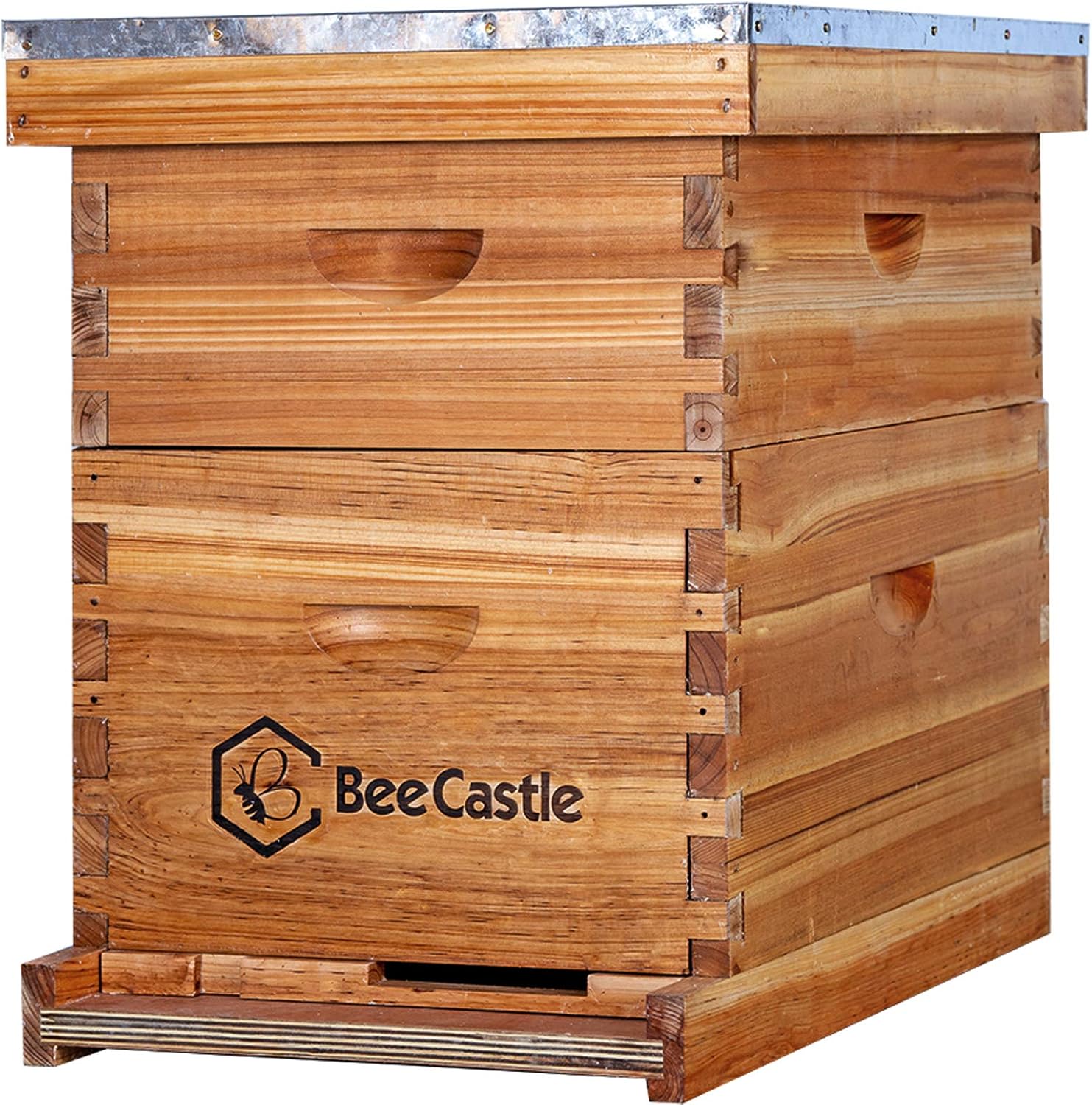
For a small assembled starting setup, consider Mann Lake’s New-Bee kit. For a larger configurable bundle, compare Betterbee’s assembled beginner kit. If you want to assemble a wax-coated hive and select your own tools, BeeCastle’s two-layer kit is a useful alternative. Each serves a different buyer.
These selections are based on manufacturer specifications and practical buying criteria. No hands-on testing is claimed. The examples use US-market Langstroth equipment; check local suppliers, regulations and bee availability in your region.
Some BeeKeeperGear product pages contain affiliate links. Purchases through those links may earn a commission. See our Affiliate Disclosure.
Compare the kits by the job they do
Mann Lake New-Bee HK121
Best fit: An assembled starting hive with core working tools. Buying check: Budget separately for suitable protective clothing; the listed equipment is not a complete personal-protection setup.
Betterbee BK10A assembled beginner kit
Best fit: A customizable bundle with equipment for expansion. Buying check: Review every selected component, frame depth and storage requirement before comparing the delivered total.
BeeCastle two-layer 10-frame kit
Best fit: Hive hardware for a DIY setup. Buying check: Allow assembly time and budget for working tools and protection as well as the hive itself.
These comparisons describe kit scope, not a performance ranking. Product options and contents can change. Confirm the exact model and contents with the seller before paying; no fixed prices or availability claims are used here.
Mann Lake New-Bee: a compact assembled start
The manufacturer’s New-Bee listing identifies model HK121 as a fully assembled 10-frame setup. Its listed contents include one deep hive body with frames and beeswax-coated plastic foundation, covers, a bottom board and entrance reducer. Working equipment includes a shielded smoker, hive tool, frame feeder and smoker fuel.
That combination reduces the number of separate hardware decisions before installation. It suits a buyer who values assembly convenience and wants to choose protective clothing separately.
Limitations to plan around: the listed package is an initial hive setup. Additional colony space, harvesting equipment, live bees and a mite-monitoring kit belong in the wider season budget. Check the feeder’s placement and remaining frame arrangement with the supplier rather than assuming every accessory occupies extra space outside the box.
Choose your future box and frame standard before buying expansion equipment. A deep frame cannot simply be moved into a medium box.
Betterbee BK10A: a broader configurable bundle
Betterbee’s assembled 10-frame beginner kit lists two deep bodies, two medium supers, frames, covers, a bottom board, feeder, smoker and hive tool. Options include frame choices, gloves, veil and helmet, a book and other components.
The useful feature is the ability to choose components while buying a coordinated group of equipment. Read the final configured contents carefully: selecting “no” for an optional item changes what arrives.
Limitations to plan around: a larger order needs storage, a clear box-management plan and an honest lifting assessment. Supplied expansion boxes do not all need to be placed on a small new colony immediately. A veil-and-helmet selection also does not provide the body coverage of a full suit.
This is a good candidate when a mentor can help review the configuration. Ask the supplier which preparation steps remain before the equipment can be used outdoors.
BeeCastle two-layer kit: hive hardware for a DIY setup
The BeeCastle two-layer kit in our catalog matches a 10-frame Langstroth configuration. The manufacturer’s component list specifies a deep box, medium box, 20 frames with foundation, covers, solid bottom board, entrance reducer, queen excluder and assembly hardware.
It is a useful option for someone comfortable checking joints, assembling frames and choosing protective gear and tools separately. Inspect the delivered parts and dry-fit the setup well before bee collection day.
Limitations to plan around: “two layer” describes this particular hive package; it does not establish the final brood-box arrangement needed in every climate. The included queen excluder is an accessory, not an instruction to place it between boxes immediately. Confirm assembly requirements for the exact seller variation.
Avoid confusing this hive-only configuration with similarly named BeeCastle bundles containing suits or tools.
Five checks that matter more than accessory count
1. Match the hive to the bees
Ask your bee supplier for the nuc’s frame depth and intended hive system before ordering. Buying a nuc on deep Langstroth frames and a hive that cannot accept those frames creates an avoidable installation problem. Our beginner hive-type comparison explains the broader choices.
2. Choose a manageable box width and depth
Compare the 8-frame and 10-frame setups before committing. Consider how you will lift a full box, reach the upper hive and work alone. More capacity is useful only if you can handle it safely.
3. Check protection by fit
Select a veil that stays away from your face, secure closures and clothing that covers you when bending. Try gloves with the actual hive tool. Do not accept a “sting proof” marketing claim as a guarantee against stings.
4. Count missing essentials
Use the existing beginner equipment checklist as a shopping cross-check. Also plan for a stable stand, water, records, mite sampling and access to local instruction. A bag of uncapping tools does not replace these.
5. Compare the complete first-season cost
Add shipping, required finishing or assembly supplies, bees, protection, feeding equipment and expansion parts. Budgeting only for the advertised hive can leave essential work unfunded. Alabama Extension’s beginning-beekeeping guidance also highlights ongoing food, protection and pest-management costs.
You can postpone buying an extractor until you have harvestable surplus and know whether a local club lends one. Preserve room in the budget for colony care.
Check the delivery before the bees arrive
Unpack the kit while there is still time to obtain a missing or damaged part. Lay out the base, boxes, frames, cover, feeder and working tools against the seller’s itemized list. Count frames by depth, not just the overall total. A spare medium frame will not replace a missing deep frame in a deep brood box.
Try the complete housing arrangement without bees. Check that the frames sit correctly, the boxes and covers match, and the chosen feeder can be fitted as instructed. If assembly is required, use the manufacturer’s directions rather than assuming every wooden component is ready for weather exposure. Keep packaging until the contents and condition have been checked.
A practical way to compare two offers
Imagine one offer includes an assembled deep hive and tools, while another includes extra boxes but needs assembly and omits working gear. Start with the same installation-day shopping list for both. Add each missing item and delivery charge, and account for the time and tools needed to finish the setup. Keep future expansion equipment separate from the immediate needs so a high component count does not hide a gap.
Ask the bee supplier one final question: “Will the frames in the nuc I am collecting fit this brood box?” Get that answer before ordering. A package of loose bees and a nuc on established frames create different compatibility decisions. This simple check can prevent buying a kit that is attractive on paper but unsuitable on arrival day.
A simple ordering sequence
- Confirm bee availability and frame compatibility with a local supplier.
- Choose a supported hive system and manageable box size.
- Compare the kit against a written list of missing equipment.
- Order early enough to assemble, inspect and resolve missing parts.
- Prepare the site using our hive-placement checklist.
- Arrange a mentor visit before the bees arrive.
Keep the receipt, component list and model identifier. Those details make replacement parts easier to order later.
Choose the bees and assess secondhand alternatives
Before ordering a kit, compare nucs and package bees so the hive matches your starting colony. If a secondhand bundle looks cheaper, use our used-equipment inspection checklist to assess its health history, fit and true repair cost.
Questions before buying
Do beginner beekeeping kits include bees?
The three equipment packages discussed here should be treated as equipment purchases. Arrange live bees separately unless the specific seller’s offer explicitly includes them, with collection or delivery terms confirmed.
Is an assembled kit worth the extra cost?
It can be, especially if time, tools or workspace are limited. Compare the delivered total and inspect assembly quality. A DIY kit makes sense when you have the tools, time and guidance to build it correctly.
Should I buy an 8-frame or 10-frame kit?
Choose using lifting ability, local support and future parts availability. Both are established Langstroth formats, but their box widths and matching covers differ. Standardize your equipment deliberately.
Are more included accessories always better value?
No. List what you will use during installation and routine care. A smaller kit with suitable protection and compatible parts can be more useful than a larger bundle full of harvesting accessories you will not use yet.
Can one starter kit support two colonies?
A kit described for one hive should not be assumed to house two colonies. Each needs its own complete housing. Some working tools can be shared, with suitable cleaning and biosecurity practices.
Product specifications checked November 10, 2026. Reconfirm the exact seller configuration before purchase.
Equipment Mentioned in this Guide